Saturday, April 30, 2011

TORNADO DEMAGE IN ALABAMA AND GUJARAT HAS A CORAL ATLAS

 
Gujarat has a coral atlas at last
Indian Express
Prepared by officials from the Gujarat Ecology Commission (GEC) and Bhaskaracharya Institute for Space Application and Geo-Informatics (BISAG), the atlas was drawn up after maps were procured from the National Remote Sensing Agency (NRSA), Hyderabad. ...
See all stories on this topic »

Indian Express
NOAA releases aerial imagery of Tuscaloosa, Ala. tornado damage
NOAA
NOAA's National Geodetic Survey dispatched the NOAA King Air 350CER aircraft, equipped with specialized remote sensing equipment, on a mission to collect aerial photography at 5000 feet from Tuscaloosa to Birmingham, Ala. These "before and after" shots ...
See all stories on this topic »

Friday, April 29, 2011

UAV

Cabinet committee sanctions Rs 1500 cr for UAV Rustam-H
Indian Express
The Defence Research and Development Organisation (DRDO) is set to deliver the next version of Unmanned Aerial Vehicle (UAV) Rustam- I. Titled Rustam H, the project has received a sanction of Rs 1500 crore from the Cabinet Committee on Security (CCS). ...
See all stories on this topic »
Air Force seeks tiny UAV that can paint targets
Defense Systems
By Defense Systems Staff The Air Force wants assistance from industry in developing a miniature unmanned aerial vehicle that could drop “dust” on a confirmed or suspected enemy soldier or terrorist, thus allowing them to be tracked from a distance, ...
See all stories on this topic »
WARPLANES: South Korea Tries Out Helicopter UAVs
Strategy Page
April 29, 2011: Austrian aircraft manufacturer Shiebel has sold two of its S-100 helicopter UAVs to South Korea. The S-100 weighs 200 kg (440 pounds), can stay aloft six hours per sortie and operates at a max altitude of 5500 meters (18000 feet). ...
See all stories on this topic »
World Surveillance Group Awarded First Government Contract
Marketwire (press release)
The contract is to create a Performance Data Package in connection with the flight testing of WSGI's Argus One UAV at the US Army's proving ground facility in Yuma, Arizona in May/June 2011. This contract follows a financing commitment of up to $1.5 ...
See all stories on this topic »

REMOTE SENSING JOBS IN INDIA AND SOUTH AFRICA

 
All India Govt. Job: various job in Haryana State Remote Sensing ...
various job in Haryana State Remote Sensing Application Centre (HARSAC). Haryana State Remote Sensing Application Centre (HARSAC) ...
www.job2site.co.cc/.../various-job-in-haryana-state-remote.ht...
Remote Sensing Jobs In Pretoria South Africa - South Africa Jobs
Looking for Remote Sensing Jobs In Pretoria South Africa? Visit South Africa Jobs for Remote Sensing Jobs In Pretoria South Africa, employment and career ...
www.southafricajobs77.com/q-remote-sensing-jobs-in-pretoria...

NASA --Rainfall Mystery

source: NASA Rainfall_Mystery

NASA Mission Seeks to Uncover a Rainfall Mystery

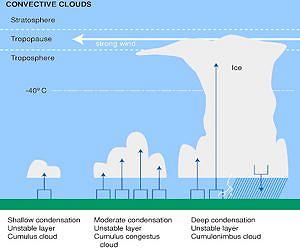
Convective clouds - a vertically developed family of clouds are cumulus and cumulonimbus. The height of their bases range from as low as 1,000 feet to a bit more than 10,000 feet. Clouds with extensive vertical development are positive indications of unstable air. Strong upward currents in vertically developed clouds can carry high concentrations of supercooled water to high levels where temperatures are quite cold. Upper portions of these clouds may be composed of water and ice. Credit: NASA Langley
by Lori Keesey Washington DC (SPX) Apr 29, 2011 Scientists from NASA and other organizations are on a mission to unlock the mysteries of why certain clouds produce copious amounts of rain. In a field mission that is now under way, aircraft are carrying instruments above and into rain clouds. Meanwhile scientists are also getting rainfall measurements on the

Thursday, April 28, 2011

 source: sourcesat-2-sends-first-imagery


Resourcesat-2 sends first imagery
Hindustan Times
PTI ISRO on Thursday received the first set of high quality images covering nearly 3000 km stretch of the Indian landmass from Resourcesat-2, the country's latest remote sensing satellite. The satellite, launched successfully by PSLV-C16 on April 20 ...
See all stories on this topic »

GIS/Remote Sensing Officer - Melbourne

Job Location(s):
Australia
Victoria - Melbourne - Show on map
This role is only available to residents of Australia
or to those who hold valid working visas or permits
Our Melbourne based client is seeking GIS/Remote Sensing Officer for at least 4 weeks.

The position of GIS/Remote Sensing Officer will work closely with the Senior Project Officer (Remote Sensing) to undertake GIS mapping, Remote Sensing and GIS spatial analysis and GIS and GPS / DGPS data collection, preparation and processing activities that support the Remote Sensing and Ground (field) Sampling. In addition, the GIS/Remote Sensing Officer will be expected to assist in the preparation of a series of GIS and Remote Sensing Standard Operating Procedures and other documentation.


JOB IN CANADA

REMOTE SENSING JOB IN CHILE

Job description
Remote sensing expert with specific interest in spatio-temporal analysis and validation of multi-source satellite time series data to study/explain the impact of climate oscillations on semiarid Northern-Central Chile. The successful candidate will contribute to ongoing projects that focus on the use of remote sensing to monitor cryospheric processes and their impact on hydrological and biological variability, but also will be able to develop his/her own research on the use of remote sensing observations to study/explain other biophysical and geophysical processes (e.g., hydrological cycle, snow distribution, glacier variability, biologic productivity, biodiversity, agricultural/aquicultural yield, oceanografic processes, atmospheric variability, etc.) in semiarid Northern-Central Chile. He/She will work in close collaboration with researchers in glaciology, hydrology and climatology to contribute to the development of a regional water observatory, but may also develop innovative research projects with biologists, ecologists, oceanographers or agricultural scientists.

 SOURCE--MORE

REMOTE SENSING JOB IN INDIA

 
Ajmer – Junior Research Fellow Recruitment 2011 – Remote Sensing ...
Department of Remote Sensing & Geo-Informatics is Hiring M.Sc. / M.Tech (Life Science/Environmental Science) candidates in 2011, AjmerApplications are.
www.coolgovtjobs.com/.../ajmer-junior-research-fellow-recrui...
Sarkari Naukri: Jobs in Haryana State Remote Sensing Application ...
Jobs in Haryana State Remote Sensing Application Centre (HARSAC). Recruitment at Haryana State Remote Sensing Application Centre (HARSAC) 2011 ...
www.dialsarkarinaukri.com/.../jobs-in-haryana-state-remote-se...

Wednesday, April 27, 2011

Vietnam To Launch First Remote Sensing Satellite By 2012

Vietnam To Remote Sensing Satellite By 2012

Vietnam successfully launched its first telecommunication satellite VINASAT-1 in April, 2008.
by Staff Writers Hanoi, Vietnam (XNA) Dec 15, 2008 Vietnam plans to launch its first remote sensing satellite by 2012, the local newspaper Vietnam News Agency reported Friday. The country is now carrying out its satellite-launching project, worth about 100 million U.S. dollars.

source----more.. 

Tuesday, April 26, 2011

JAPANESE OBSERVATION SATELLITE FEARED LOST

Japanese Earth observing satellite feared lost
Spaceflight Now
BY STEPHEN CLARK Japan's Advanced Land Observing Satellite, one of the world's foremost remote sensing platforms, inexplicably lost power Friday, likely ending its mission mapping Earth and monitoring natural disasters, according to the Japan Aerospace ...
See all stories on this topic »

REMOTE SENSING JOBS IN THE USA , INDIA AND SINGAPORE


 REMOTE SENING JOBS IN SINGAPORE

JRF Jobs in IIRS Indian Institute of Remote Sensing Recruitment ...
Indian Institute of Remote Sensing (IIRS) Indian Institute of Remote Sensing invites application for the post of Junior Research Fellow (JRF) for a period ...
exams.freevar.com/jrf-jobs-in-iirs-indian-institute-of-remote-s...
Remote sensing / GIS training (Salt Lake City) « Work | Jobs in Utah
Position Description: Redcastle Resources seeks one or more remote sensing and GIS interns with the data-processing, analysis and geospatial modeling ...
utah-job.us/remote-sensing-gis-training-salt-lake-city/

uav

Fire Scout UAV sets single-day flight record
High Performance Composites
Northrop Grumman's MQ-8B Fire Scout unmanned aerial vehicle (UAV) marked a new single-day flight record of 18 hours in anti-piracy missions with US Navy's 5th Fleet. Northrop Grumman Corp. (San Diego, Calif., USA) announced on April 12 that its MQ-8B ...
See all stories on this topic »

Monday, April 25, 2011

INDIAN SATELLITE FUNCTIONING SATISFACTORILY

 SOURCE: GOOGLE
Resourcesat-2, Youthsat, X-Sat functioning satisfactorily
IBNLive.com
PTI | 08:04 PM,Apr 25,2011 Bangalore, Apr 25 (PTI) The country's latest remote sensing satellite Resourcesat-2 and two micro satellites launched by home grown PSLV-C16 rocket on April 20 from Sriharikota in Andhra Pradesh "are functionin
   

India's latest satellite to beam pictures from Thursday
Mangalorean.com
Chennai, April 25 (IANS) India's latest advanced remote sensing satellite Resourcesat-2, launched last week, is all set to beam back pictures Thursday onwards, the Indian space agency said. A statement issued by the Indian Space Research Organisation ...
See all stories on this topic »
Hexagon Geosystems sponsors 2011 Carl Pulfrich Award
IEWY News
Nominees will be considered on the basis of experience, activities in field of photogrammetry and remote sensing, and contributions to the advancement of all aspects of the earth imaging field. Applied work involving hardware systems, ...
See all stories on this topic »
   

RADAR REMOTE SENSING

Radar Remote Sensing of Arid Regions - EECS
Event Title: Radar Remote Sensing of Arid Regions. Speaker: Adel A. Elsherbini. Sponsor: Kamal Sarabandi. Event Date: Apr29. Time: 2:00 pm - 4:00 pm ...
www.eecs.umich.edu/eecs/etc/events/eceshowevent.cgi?2069

REMOTE SENSING JOB IN THE USA

Remote Sensing Intern Salaries in Arlington, VA | Simply Hired
The average salary for remote sensing intern jobs in Arlington, VA is $51000. ... The remote sensing intern salary comparisons feature allows job seekers to ...

 
www.simplyhired.com/a/salary/search/q.../l-arlington,+vaGis Jobs Indiana - Kinglab
Shown jobs as tour guide are graduate hr jobs results for" gis jobs in pune" in Pune: All Categories. IT/Communications - GIS /Remote Sensing government ...
kinglab.eeb.lsa.umich.edu/wiki/Gis_Jobs_Indiana

Sunday, April 24, 2011

CHENNAI: The three satellites put in orbit on Wednesday by the Polar Satellite Launch Vehicle (PSLV-C16)

CHENNAI: The three satellites put in orbit on Wednesday by the Polar Satellite Launch Vehicle (PSLV-C16) are “absolutely fine,” officials of the Indian Space Research Organisation (ISRO) said on Thursday.
The Resourcesat-2, the Youthsat and the X-Sat were in good health and working satisfactorily, they said.
The Resourcesat-2, an advanced remote-sensing satellite, will replace the Resourcesat-1, which was put in orbit in October 2003. The Resourcesat-2 has been fitted with three sophisticated cameras, and the first images of the earth are expected on April 28. Though the Resourcesat-1's life was five years, it was still sending pictures of the earth.
The images from the Resourcesat-2 will be useful in estimating the acreage of crops and the stress they are under, keeping a surveillance on pests, locating groundwater, identifying schools of fish in the sea, predicting the advance of glaciers, monitoring water bodies and keeping a watch on deforestation or changes in the rural and urban landscape.

source: more 

Wednesday, April 20, 2011

'Supermoon' expected tonight


 SUPERMOON ECPECTED TONIGHT

Myjoyonline.com
Remote sensing expert, Dr. Emmanuel Amamoo-Otchere told Joy News that a 'Supermoon' is experienced when a full moon comes close to the earth on its lunar orbit. “The moon will rise from Accra position about forty minutes after about seven o'clock ...

Tuesday, April 19, 2011

CHENNAI: The 54.5-hour countdown for the April 20 launch of the PSLV rocket,

The countdown for the April 20 launch of the PSLV-C16 mission, that will put the country's latest remote sensing spacecraft Resourcesat-2 and two small satellites 822 km above Earth, began in the early hours today at the spaceport of Sriharikota near here. Indian Space Research Organisation's workho
rse Polar Satellite Launch Vehicle will carry three payloads weighing 1,404 kg in total and put them in Polar Sun Synchronous Orbit, 822 km above Earth on its 18th mission.


source....more....

Saturday, April 16, 2011

New Delhi: Isro announce that it will launch three satellites, including an advanced remote sensing satellite

New Delhi: Isro announce that it will launch three satellites, including an advanced remote sensing satellite to study and manage natural resources, on April 20. New Delhi: Election Commission issues notice to Tamil Nadu Deputy Chief Minister MK Stalin ...
See all stories on this topic »https://mail.google.com/mail/?hl=en&shva=1#inbox/12f60d1a7cd0e60b


CELL PHONE& GPS USD$64.49

What you Really Need To Know About Remote Sensing Technology

A class is designed for engineers, scientists and other remote sensing professionals who wish to become familiar with multispectral and hyperspectral remote sensing technology.


source...more..

Saturday, April 9, 2011

Tango with Israel


 The recent launch of the spy satellite RISAT-2 by India’s PSLV-C12 emphasises the widening of strategic ties between India and Israel. 

 MORE..
THE charade put on by the Indian Space Research Organisation (ISRO) around its twin-satellite launch on April 20, aboard the 15th mission of its Polar Satellite Launch Vehicle (PSLV-C12), was completely uncalled for and, not surprisingly, unsustainable. It was clear from reports worldwide that the main payload of the mission, a 300-kilogram radar imaging satellite called RISAT-2, was a microwave-based high-resolution imaging reconnaissance (or spy) satellite, which India had procured from Israel. Radar-based imaging has an all-weather – including cloudy and foggy conditions – 24-hour viewing capability as well as an ability to distinguish camouflaged formations from surrounding terrain. But ISRO chose to pretend it was a satellite “realised by ISRO in association with Israel Aerospace Industries [IAI]…[that] will enhance ISRO’s capability for earth observation, especially during floods, cyclones, landslides and management of disasters in a more effective way” (emphasis added).
Why ISRO resorted to obfuscation using words such as “realised” cannot be fathomed. Insiders say that it was a decision at the highest level of the government. ISRO obviously could not say that the satellite was collaboratively built with the IAI because it clearly was not. For one, ISRO’s earth observation systems specialists are busy sorting out technical problems with its own radar imaging satellite, RISAT-1, which was originally slated to go on PSLV-C12, and it is extremely unlikely that the organisation has enough specialists to put together another earth observation team for a system with a totally different technology. It now seems that all the problems with RISAT-1 have been successfully solved, and the indigenous radar imaging satellite, which has a high-resolution reconnaissance capability, could take to the skies by the end of the year.

SOURCE: http://www.hindu.com/fline/fl2610/stories/20090522261003000.htm

Friday, April 8, 2011

UAV REMOTE SENSING

Unmanned Remote Sensing Aircraft Takes Flight

China's first high-end and multi-functional remote sensing unmanned aerial vehicle (UAV) made its successful test flight on Monday in Huangguoshu Airport, Anshun City, southwest China's Guizhou Province.

The remote sensing system, jointly developed by Peking University and Guizhou Aviation Industry (Group), adopts intelligent and high-definition data retrieving technologies. According to experts, it is of a world-class standard in terms of flight function, navigation accuracy, communications, equipment as well as manufacturing cost.

The Institute of Remote Sensing and Geographic Information System of Peking University is one of the pioneering units to have engaged in developing remote sensing technologies and application research in China.

Guizhou Aviation is China's largest aviation development and production base. It has been researching and developing UAVs for many years. The coaching and unmanned planes developed by it made successful maiden flights on December 12, 2003.

In recent years, the institute and the company have cooperated in research and development, making breakthroughs in remote sensing facilities, image recognition and processing, image resolution and downsizing facilities.

According to experts, the UAV remote sensing technology has great development potential in China. It could be widely used for land and environment surveys, meteorological research and natural disaster monitoring.

Remote sensing technology is a tool that is widely used to study, for example, the Earth's surface and atmosphere, from a distance from an aircraft or satellite.
Source: Xinhua News Agency

Wednesday, April 6, 2011

India, Russia space cooperation reaching new heights

Bilateral relations between India and the Russian Federation have always been one of the most important foreign policy priorities of both the countries.

This strategic relationship has served not only in the long term national interests of India and Russia but has also effectively contributed in the space arena including scientific research & developmental programmes.

Today, space and cyber space are the new frontiers of national security. Space is a major key sector of cooperation between India and Russia. Both the countries have been cooperating with each other in the field of space technologies for many years.

In the 1970s-80s, the erstwhile Soviet Union has launched first Indian satellites- Aryabhatta and Bhaskara from its Baikonur cosmodrome. The first Indian astronaut Rakesh Sharma has travelled to the Soviet Salyut-7 space station in 1984.

India’s space ambitions, since its inception in the early 1960s, have been mainly focused on practical applications. The country’s pioneering space agency, Indian Space Research Organisation (ISRO) has worked in favour of applications like communications and remote sensing that promised practical benefits to the Indian people.

But, for the last few years Indian space programme has taken a major leap. It has moved beyond its traditional missions to focus on new areas, like India’s first lunar mission (Chandrayaan-1), navigation, joint ventures in space science, and others.

Space and Technology is one of the major arenas where India and Russia share a long standing and successful cooperation. Both the countries actively participate together in many fields of exploration and peaceful uses of outer space. Currently it has many operational agreements in the fields of moon exploration, global navigation system, human space flight, spacecraft building for atmospheric studies, etc.

During President Vladimir Putin's visit to India in December 2004, two space related bilateral agreements were signed viz. Inter-Governmental umbrella Agreement on cooperation in the outer space for peaceful purposes and the Inter Space Agency Agreement on cooperation in the Russian satellite navigation system "GLONASS". Subsequently a number of follow up agreements on GLONASS have been signed.

India is a partner in this crucial project, and could be expected to launch some of the satellites for Glonass in the near future.

Russia currently has a total of 26 GLONASS series spacecraft in orbit, but three of them are not operational. Recently, three Glonass-M satellites crashed into the Pacific Ocean after the Proton-M rocket carrying them failed to reach orbit following their launch. Russia has also postponed the launch of its new-generation navigation satellite GLONASS-K until 2011. The satellite atop a Soyuz-2.1.b carrier rocket was to blast off from the Plesetsk Space Center in northern Russia on Dec 28.

Other than partnership in Glonass navigation systems, in November 2007, the two countries have signed an agreement on joint lunar exploration. The agreement was signed between India and Russia to cooperate on the development of Chandrayaan-2, a mission which features both an Orbiter and a Lander. These space cooperation programmes are currently under implementation.

In the field of human spaceflight programme, ISRO is planning to go ahead with its first manned mission slated for launch in 2017. This manned flight is considered as a calculated move by the country to boost its national prestige and sharpen its technological edge and scientific expertise for deep space missions including a possible lunar human landing by 2020.

India would be requiring about Rs. 12400 crore for the manned mission which ISRO plans to spend on the setting up of several ground facilities like launch pads, the mission control center, astronaut training center, all permanent assets on the ground including what goes into the orbit. The Indian Government is yet to give approval on ISRO’s proposal.

On December 2008, during the visit of Russian President Dmitry Medvedev to India, both the countries signed a memorandum of understanding on joint activities in the field of human spaceflight programme. According to the accord, an Indian cosmonaut will once again be part of a space mission on board a Russian spacecraft.

Friday, April 1, 2011

Satellite Sensors

To see more satellite sensor visit the following web:


http://www.satimagingcorp.com/satellite-sensors/worldview-1.html

WorldView-1
Satellite Sensors
Learn more about each sensor and view sample satellite imagery.
» ALOS
» ASTER
» CARTOSAT-1
» CBERS-2
» FORMOSAT-2
» GeoEye-1
» GeoEye-2
» IKONOS
» LANDSAT 7
» QuickBird
» SPOT-5
» WorldView-1
» WorldView-2

Page visitor

submitbox

MISSION

The mission of the Remote sensing Club is to be a centre for gathering information in remote sensing, GIS and GPS research and applications towards knowledge advancement and discovery of knowledge towards the creation of wealth

visitors